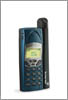
Satellite Phone

Wednesday, November 11, 2009

Sat-phone technology and guerilla warfare

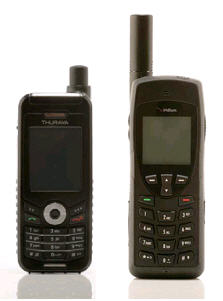
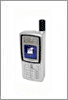
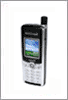
Alex de Waal has posted an interesting piece on the fantastic Making Sense of Darfur blog in which he explains how communication technology is further transforming the face of warfare in locations where communication used to be far more time consuming. In the piece, De Waal analyzes the specific impact of the Thuraya satellite phone on conflict in Darfur; rebel leaders can now communicate with each other from the remotest of areas.

"The advent of the Thuraya phone has radically changed warfare in across the Sahara desert, as illustrated in the case of Darfur. Twenty five years ago, I remember travelling across Darfur with no phone lines, with telecommunication possible only through ageing two-way radios in the police stations. The mail was slow and unreliable. The only way of communicating anything other than the tersest instruction or question was to meet face to face, or send a messenger. On top of the cellphone, which has transformed communication in urban areas, the Thuraya phone has made it possible for people in the remotest locations to communicate instantly. In other places, this has transformed long-distance trade. In Darfur, it has transformed warfare. Desert warfare, as practiced by the Chadians and Darfurians, is based on mobility and surprise. The Landcruiser is the basic unit of military force. The possession of a Thuraya elevates a commander into a potential leader.

Tactical coordination is key to a successful operation. Before the Thuraya phone, guerrilla operations needed tight discipline and extremely careful planning. More often, the commanders gambled on surprise and the momentum of battle, relying on their prowess in combat to carry the day. Today, with the Thuraya phone, commanders in distant theatres can coordinate their actions. Or they can assemble forces from different places at very short order. They only need to agree on that day’s operation—tomorrow’s can be planned tomorrow. A commander with a handful of Landcruisers and a Thuraya is essentially autonomous at a tactical level. It is possible for commanders who formally belong to different factions to coordinate a joint operation at very short notice. Their superiors can do little about it. And it happens.

Airtime is a precious commodity and can be transmitted from one Thuraya to another. Money can be sent too. Instant communication can be backed up by instant resources. Hierarchical command and control over a dispersed force becomes difficult.

Warfare in these places is also a livelihood and a means for political bargaining. Before telecommunications, political bargains had to be negotiated face to face. And once a bargain was made, say between a tribal leader and a provincial governor, it was difficult for the chief to renegotiate or to seek out another patron. The pace of political renegotiation was slow. The Thuraya has revolutionalized the bargaining process, and allowed the chief, or rebel commander, to conduct several negotiations in parallel. He can monitor the marketplace, weigh up his options, and renegotiate his deals rapidly.

The Thuraya war is a facet of globalization and the information technology revolution. It is a deregulation of violence, and developed much more rapidly than the mechanisms for managing and resolving conflicts."

Then again, satellite phones also make it easier for information to be conveyed between warring parties. Misconceptions about an opponent’s capabilities are a major reason behind the unnecessary continuation of a given war. As de Waal has explained, satellite phones ease the difficulty of negotiations and could therefore shorten the course of war by making it more difficult for commanders to withhold private information. This could provide groups with more opportunities to end a war.

Labels: , , , ,

Tuesday, August 18, 2009

Thuraya launches a new phone - Thuraya XT

Thuraya launches a new satellite phone namely Thuraya XT which is claimed to be the world's toughest satellite phone. Having released it with the many advanced features to ensure resilience, the company ensures that the device complies with world telecom IP54/IK03 standards. This makes it water resistant, and unaffected by dust and it is considered to be the most reliable satellite handheld phone launched so far.

thuraya xt satellite phone

In times when many facilities are required in a handheld phone, this innovative satellite handheld is released keeping all the needs of consumers in perspective. Adding more to its advanced features, it provides users with GPRS facility, allowing browsing the web with a laptop or PC from any location and in-built GPS-Navigation feature allowing users to create and manage Waypoints. Along with its battery longevity which has a talk-time of up to 6 hours, its standby-time is of up to 80 hours. This satellite handheld phone has been designed to allow consumers to use it in severe environments protecting its damage from water, dust and shocks.
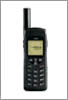
This innovative phone has a glare-resistant with an internal brightness sensor making possible to have perfect readability outdoors due to its low reflection in bright environments. With the ruggedness of the phone, the Thuraya XT is designed with a professional and user-friendly menu allowing users to access the functions of the phone in a less span of time.

The phone also provides messaging through SMS, e-mail, fax and Organiser services and supports 12 languages. Besides, adding more to its ruggedness is the outside casing of the device. The external housing is manufactured using the latest polycarbonates and has attached rubber seals on all plugs for entire and complete protection, ascertaining the phone's durability in severe and harsh outdoor environments.

The Thuraya XT weighs only 193 grams, making it one of the smallest satellite phones. The mobile satellite operator provides a wide coverage in more than 140 countries ranging from Iceland to Australia. The product's price and availability is not revealed by the company yet.

Thursday, May 07, 2009

New try for cell-like satellite phone

The vast, thinly populated expanses of the country that still lack cellphone coverage could be getting an interesting option next year: ordinary-looking cellphones that connect to a satellite when there's no cell tower around. In June, a rocket is scheduled to lift the largest commercial satellite yet into space. In orbit 22,000 miles above the Earth, the satellite will unfurl an umbrella of gold mesh 60 feet across and aim it at the U.S.

skyterra satellite

That gigantic antenna will let the satellite pick up signals from phones that are not much larger than regular cellphones. That satellite, from TerreStar, is due to be followed by two similar, even larger ones from SkyTerra Communications next year. SkyTerra puts the cost of its satellites at $1.2 billion. On the face of it, these are bold moves, especially considering that the satellite phone business has been troubled. Most famously, two companies with grand projects for worldwide satellite phone coverage, Iridium and Globalstar, filed for bankruptcy at the beginning of the decade, wiping out billions in investor capital. But the background to the new launches is more complicated, and analysts say the business models of TerreStar and SkyTerra ultimately might rely more on the companies becoming acquisition targets for conventional wireless carriers.

Elektrobit satellite phone

There's plenty of competition in satellite phones, even though it's a niche market. Iridium and Globalstar are still in operation, providing last-resort communications for the military, forest wardens and others who can afford to buy dedicated, bulky satellite handsets for $1,000 and up. Inmarsat offers a third alternative. Even so, SkyTerra and TerreStar say their new satellites, combined with advances in chip technology, can take "satphones" into the mainstream — devices you'd buy in an AT&T store. The ability to call via satellite will be marketed as "an insurance policy or peace-of-mind feature," said SkyTerra spokesman Tom Surface. The first handsets for TerreStar's satellite would cost about $700, said TerreStar chief executive Jeff Epstein. At a cellphone trade show earlier this month, the company displayed a prototype built by small Finnish company, Elektrobit. The phone has a typewriter-style keyboard and runs Windows Mobile software, making it similar to many BlackBerry-style, e-mail-oriented phones for corporate use, but a bit thicker. And unlike Iridium and Globalstar phones, there's no protruding antenna. Both companies indicate that calling over a satellite will cost less than $1 per minute, the approximate price of Iridium calls. TerreStar also has a roaming agreement with AT&T for calls that don't go through the satellite, and expects the combined satellite and ground system to be working before the end of this year. One significant limitation, beside the fact that the phones will work in North America only, is that the handsets need to be in clear view of a satellite Given these limitations, and the steady expansion of ground-based networks, is there really a mass demand for satellite phones? Satellite analyst and consultant Tim Farrar at TMF Associates is skeptical. He believes the number of people interested in satellite calling, even if just for emergencies, is small compared to the overall cellphone market. "Last time around, people tried out Iridium phones, and thought 'What use is this to me if I have to go out and stand in the middle of a field to make a call?' " he said.

satellite cell phone

Given these obstacles, Farrar believes the value of SkyTerra and TerreStar is in their airwave spectrum holdings. The companies have permission from the Federal Communications Commission to use slices of the airwaves for both satellite and ground-based networks, as long as a satellite is in orbit. Eventually, TerreStar and SkyTerra could try to put those airwaves to use with their own cell towers on the ground — or they could use that spectrum to entice a carrier like AT&T or Verizon. The wireless companies would normally have to pay billions for spectrum with nationwide coverage, but they might find that snapping up one of these satellite companies is a cheaper way to get that access, said Armand Musey, a satellite consultant.

Labels: , , , ,

9505A handset is entering its End of Life stage

Iridium has formally announced that the Iridium 9505A handset is now entering its End of Life stage. The End of Life stage begins once a product is no longer being manufactured or the product is being replaced by a newer model.

iridium motorola 9505 A

This announcement affects all Iridium 9505A handset kits including the Iridium 9505A Essential Kit, Iridium 9505A Complete Kit, Iridium 9505A Grab & Go Kit and also the Iridium 9505A Refurbished Kit.

Labels: , , , , , , ,

Friday, February 13, 2009

Iridium communications satellite destroyed after collision

A commercial Iridium communications satellite and decommissioned Russian satellite both appear to have been destroyed after an unprecedented collision in space. The collision took place on Tuesday and was verified by U.S. government organizations that track satellites and other orbits. The in-orbit collision will mean brief service outages for some customers over the next few days but Iridium said it expects to have the issue largely resolved by Friday. Within a month, the company expects to have one of a number of in-orbit spare satellites moved into position to replace the one that was lost.

Iridium communication satellite

AFP has reported that he incident was confirmed by Major General Alexander Yakushin, the head of the Russian space industry who said: "A collision occurred between an Iridium 33 satellite and a Russian Kosmos 2251 military satellite." Iridium has already denied that it was at fault for the incident and in a statement described it as a, "extremely unusual, very low-probability event".

The Iridium satellite was one of 66 orbiting the earth, provide mobile phone communications but the company said that its services would not be affected as it "is uniquely designed to withstand such an event, and the company is taking the necessary steps to replace the lost satellite with one of its in-orbit spare satellites."

The incident occurred approximately 500 miles above Siberia, and above the orbit of the International Space Station. However, NASA has already said that it does not believe the incident poses any risk to the ISS and does not believe it will delay the launch of the Discovery space shuttle flight that’s scheduled for 22 February.

While space detritus does collide occasionally, it is the first time that two satellites have crashed. "We knew this was going to happen eventually," Mark Matney, an orbital debris scientist at Johnson Space Center in Houston is reported to have said.

Labels: , , , , ,

Monday, January 19, 2009

Inmarsat warns of BGAN outages

Inmarsat has warned Asian users of its Broadband Global Area Network (BGAN) that they will lose some coverage over the next month as the operator repositions three satellites. The coverage gap for Asia will include much of China, most of southeast Asia, Western Australia, and all of Korea until the repositioning is completed tentatively by February 24.

Inmarsat coverage

The first phase of the repositioning is already underway, with the F2 satellite being relocated to better cover India and EMEA, Inmarsat's most heavily trafficked area. The repositioning move leaves a strip of the Atlantic Ocean and parts of the coasts of Africa, the UK and Greenland uncovered.

Once that phase is completed by February 7, the next phase will involve moving the F1 satellite to extend coverage in the Asia-Pacific, currently Inmarsat’s biggest BGAN customer base.

Inmarsat’s third I-4 satellite (I-4 F3), launched late last year, went into commercial service January 7, taking over BGAN traffic (including its new FleetBroadband and SwiftBroadband customers for maritime and aeronautical, respectively) from the I-4 F2 satellite. Because the first two I-4 birds were positioned to provide as much coverage as possible until the third satellite was ready, they must now be repositioned to optimize coverage over the land masses they serve and provide better look angles for the terminals.

No customer would completely lose service during the outage, and that everyone has been forewarned. Services for maritime and aeronautical customers will still be available via the I-3 satellites, although some BGAN users will have to drop down to the previous-generation GAN services. Inmarsat and distributors have been working with them, and the customer reaction has been positive because they all understand the net benefit of better service after the positioning is competed.

The customer base for services like FleetBroadband and SwiftBroadband, which leverage the I-4 satellites to enable broadband Internet services on ships and airplanes, is pretty small. Inmarsat launched those services about a year ago, and there is only about 1,500 FleetBroadband users globally. It means there’ll be very little impact for maritime users. Most of them have installed FleetBroadband gear alongside existing Inmarsat equipment. They have something naturally to fall back on. And most importantly it doesn’t impact safety services at all.

Labels: , , , , , ,

Monday, January 05, 2009

New Thuraya Location Services Launched

Building upon the success of "ThurayaLocate" service launched in August 2008, two more location services based on Thuraya system have recently been launched by Geonix, a leading UK-based location services and equipment provider. ThurayaAssist and ThurayaRelay are new services that are deployed on the GPS feature built in Thuraya handsets.

thuraya locaton service

Uniquely, every satellite phone developed for the Thuraya network contains an embedded GPS positioning system, and this is used - when initiated by the user - to report the handset's position to the Thuraya location service servers.

ThurayaAssistTM caters to corporate clients, NGOs and government organizations and is a fully manned and managed emergency position and response service available 24 hours a day and 365 days a year.With one call to the global control center, advice and assistance is initiated from specially trained security specialists, who are able to view the user's location from within 10 meters, anywhere on earth. Consequently, routine position reports and emergency SMS messages can be relayed up to ten email addresses and mobile phone numbers of family, friends and loved ones to know where users of ThurayaAssistTM are. Additionally, tailored security information and pre-trip briefings for all countries is provided with unlimited usage to members of the new service. ThurayaAssistTM is provided at a subscription cost of just $249.99 a year per handset.

ThurayaRelayTM is a service also for corporate clients, NGOs and government organisations that wish to have the relaying of routine and emergency position reports, but who wish to manage the response centre themselves. A full range of country and region security information continues to be available via access through the website. The cost for ThurayaRelayTM is $149.99 a year per handset.

Both services are only available on customer's demand and can be subscribed to online by logging onto ThurayaLocate, ThurayaAssist and ThurayaRelay web sites. Moreover, subscribers can message Geonix on a specialised Thuraya number or contact Geonix directly. Alternatively, they can demand the service from their Thuraya SP. ThurayaAssist and ThurayaRelay are unique services that preserve the privacy rights of all users.

Labels: , , , , ,

Thursday, October 23, 2008

New Iridium Satellite Phone - 9555

new iridium 9555 satellite phone

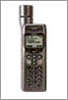
Iridium's latest satellite phone - the Iridium 9555 - is a vast departure from most existing "brick" satellite phones and appears well on its way to looking like a cell phone. With its hand-friendly form factor and bright screen, the 9555 is expected to find a large audience among first responders and public-safety users.

The handset was introduced at this week's Iridium Partner Conference and is expected to be available for customers next month. With its hand-friendly form factor and bright screen, the 9555 is expected to find a large audience among first responders and public-safety users. The phone has a mini USB port and features e-mail capability.

Iridium phones are the only handsets that can be used in absolutely any location, in any condition, instead of cellular, landline, or radio services that can become inoperable when towers go down or telecommunications infrastructure is compromised. The 9555 is the phone that first responders will want to have on hand for backup emergency communications in case of natural or man-made disasters.

While still expensive by cell phone standards, the 9555, along with new calling plans, is expected to bring the phone into the affordability range of more U.S. rural users, who can't get traditional cell phone service. A refurbished Iridium phone can cost less than $1,000, while some corporate calling plans enable users to call for as little as 15 cents a minute, although typical calls range from 99 cents to $1.49 a minute.
Labels: , , ,